Most homes in Brisbane’s premium suburbs already have cameras. Very few have security.
That sounds provocative, but consider what a standalone camera actually does. It records. If something happens, you get footage of it happening. The camera does not deter anyone who is not looking at it, it does not respond, and it certainly does not protect your family in the moment. It is a witness, not a guard.
Integrated smart security is a different philosophy entirely. Instead of a collection of separate devices, the cameras, alarm, access control, intercom, lighting and automation all work as one coordinated system. The result is a home that deters, detects, responds and keeps you informed, whether you are in the kitchen or overseas.
Here is what that actually looks like in practice.
Layer one: deterrence before anything happens
The best security event is the one that never occurs, and an integrated home is remarkably good at preventing them.
Occupancy simulation. When you are away, the home does not sit dark and silent. Lighting follows realistic evening patterns, blinds move on schedule, and the house looks convincingly lived in. This is automated, not a lamp on a cheap timer.
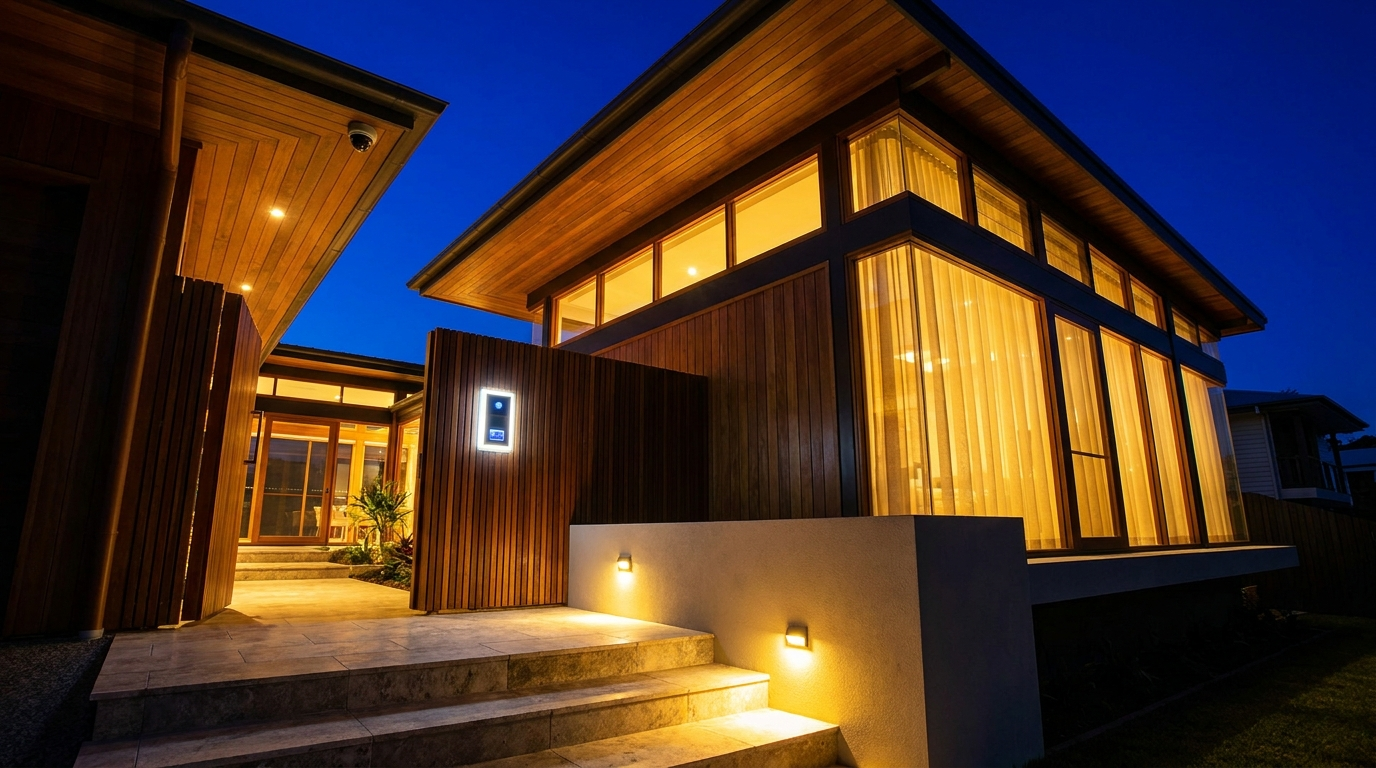
Visible, professional-grade cameras. Discreetly installed but clearly present, quality CCTV signals that this home takes security seriously. Opportunists move on to easier targets.
Perimeter awareness. Modern cameras with intelligent analytics can distinguish a person from a possum. Someone lingering at the fence line at 2 am can trigger the garden lights to full brightness, which is usually all it takes.
Layer two: detection that understands context
Traditional alarms are blunt instruments. They are either fully armed or fully off, and they cannot tell a burglar from a teenager coming home late. Integration adds intelligence.
Smart arming modes. The system knows the difference between “night” (perimeter armed, family asleep inside), “away” (everything armed), and “home” (monitoring the boundary while you move freely). One touch on a keypad or a phone sets the right mode, or the home sets it automatically based on the time and who is present.
Intelligent video analytics. Instead of motion alerts every time a tree moves, you receive alerts that matter: a person in the yard, a vehicle in the driveway, a package at the door. False alarms disappear, so real alerts get taken seriously.
Every entry point, one system. Doors, windows, gates and the garage all report to the same brain. If the garage door is still open at 10 pm, the house tells you.
Layer three: response, not just recording
This is where integration truly separates itself from a box of standalone gadgets. When something happens, the home responds as a whole.
Imagine an intrusion is detected at a rear door while the family is asleep. In the same second: every light in the house snaps to full brightness, the path from the master suite illuminates, the sirens sound, all exterior cameras begin priority recording, and your phone shows you exactly which zone triggered with live video. An intruder who expected a dark, sleeping house is standing in a stadium.
Or a gentler scenario: the doorbell rings while you are at work. The intercom appears on your phone with two-way audio. It is a delivery, so you speak to the driver, watch them leave the parcel, and get a snapshot for your records. If it had been a trusted tradesperson, you could have unlocked the door remotely, watched their visit, and locked up behind them, with a complete access log.
Layer four: control from anywhere
An integrated system gives you one app for everything, not eleven apps from eleven manufacturers.
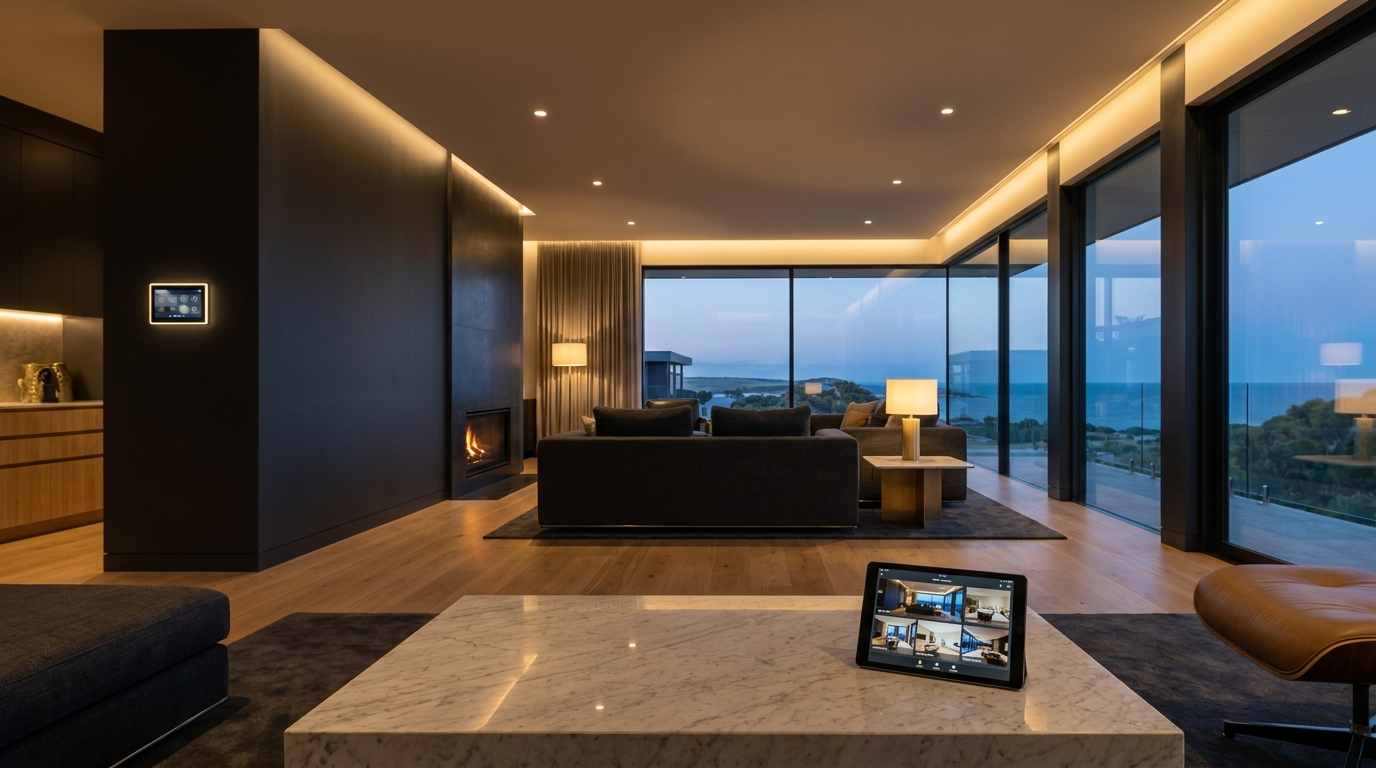
From that single interface you can view any camera live, check whether the house is armed, see who has come and gone via access logs, lock or unlock doors, and review recorded footage. Whether you are at the office, at the coast for the weekend or overseas for a month, the home is in your pocket.
Just as importantly, everyone in the family gets the appropriate level of control. Kids can have codes or fobs that work on certain doors at certain times. Cleaners and gardeners can have scheduled access windows. You always know, precisely, who opened what and when.
The foundation: a secure network
One thing we insist on saying plainly: a smart security system is only as trustworthy as the network it runs on. Cameras, locks and intercoms are network devices, and on a poorly configured consumer network they can become liabilities rather than protections.
Every Sentra Tech security installation is built on an enterprise-grade, professionally secured network. Camera systems are segregated from your everyday devices, remote access is properly encrypted, and the whole environment is configured to commercial standards. Security hardware on an insecure network is a contradiction, and we do not build contradictions.
Designed around your home, not a package off the shelf
Because we are brand agnostic and certified across platforms including Control4 and Crestron Home, we design the security layer around your property and your family’s routines. A riverside home, an acreage estate and an inner-city residence all have different risk profiles, sight lines and entry points, and their systems should reflect that.
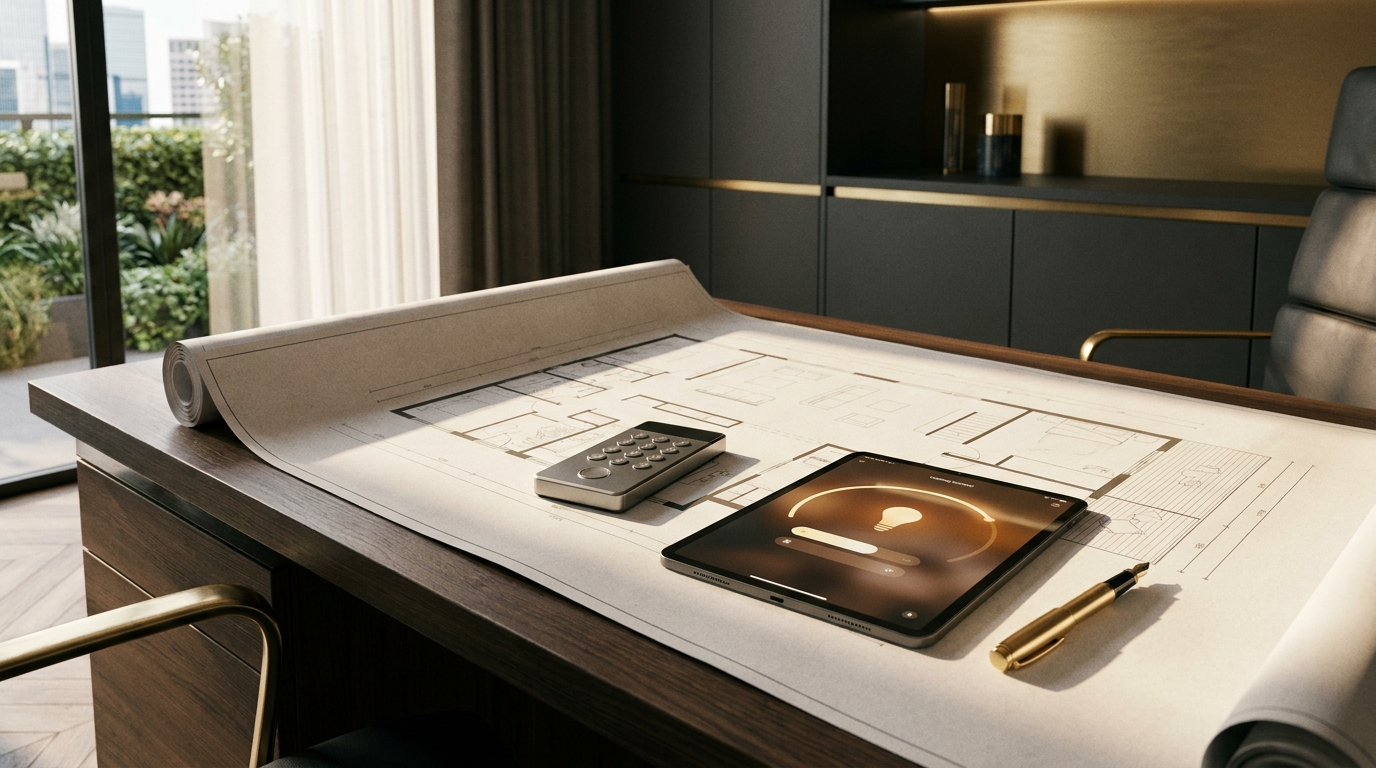
The process starts with a walk through your home, or your plans if you are building. We identify the genuine vulnerabilities, design the camera and detection coverage around them, and integrate the whole thing with your lighting, intercom and automation so it behaves as one intelligent system.
Sleep well, travel lighter
The real product of integrated security is not footage or hardware. It is the feeling of locking one thing, the whole house, with one touch, and not thinking about it again until you are home.
Sentra Tech designs and installs integrated smart security across Brisbane and South East Queensland. Call 07 3262 7676 or contact us through the website to arrange a security consultation for your home.